
What a horrible jobs report because all the teenagers have stop looking for a job, and the younger generation has given up on the once hopeful American economy of days gone by all together. The kids have quit on the American dream, because the American economy is a basket case of government control and corruption.
Now inspite of America free falling into a debtor grave one day, president Barek Obama wants to bomb Syria.. Everyone I know don't want to bomb Syria, even the pope of the catholic church has told Obama not to attack Syria. So how do you like them apples Mr. president?
http://www.youtube.com/watch?
-------------------
http://www.usnews.com/news/
Syria's 'rebels' and soldiers agree: Military strikes will change nothing...
PETRAEUS: 'NECESSARY'...
Sen. Graham: If we don't get this right, we could be nuked...
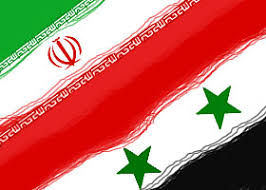
OBAMA TO LINK SYRIA WITH IRAN?
-------------------
http://www.marketwatch.com/
2013-09-06
By Jeffry Bartash, MarketWatch
 WASHINGTON (MarketWatch) — The U.S. created a modest 169,000 jobs in
August, hiring was much weaker in July than previously believed and more
people stopped looking for work in a sign that labor-market conditions
worsened toward the end of the summer.
WASHINGTON (MarketWatch) — The U.S. created a modest 169,000 jobs in
August, hiring was much weaker in July than previously believed and more
people stopped looking for work in a sign that labor-market conditions
worsened toward the end of the summer.
-------------------
http://swampland.time.com/
Francis warns military strike would be 'futile'...
Calls all Catholics to pray and fast...
CBSNEWS laments 'religious street protest'...


POPE TAKES ON OBAMA
--------------------
http://www.youtube.com/watch?
-------------------
http://www.wnd.com/2013/09/
The Saudis and Gulf Arabs, cash-fat on the $110-a-barrel oil they sell U.S. consumers, will pick up the tab for the Tomahawk missiles.
Has it come to this – U.S. soldiers, sailors, Marines and airmen as
the mercenaries of sheikhs, sultans and emirs, Hessians of the New World
Order, hired out to do the big-time killing for Saudi and Sunni royals?
Yesterday, too, came a stunning report in the Washington Post.
The Conference of Presidents of Major American Jewish Organizations has joined the Israeli lobby AIPAC in an all-out public campaign for a U.S. war on Syria
Marvin Hier of the Simon Wiesenthal Center and Abe Foxman of the Anti-Defamation League have invoked the Holocaust, with Hier charging the U.S. and Britain failed to rescue the Jews in 1942.
Yet, if memory serves, in ’42 the Brits were battling Rommel in the desert and the Americans were still collecting their dead at Pearl Harbor and dying on Bataan and Corregidor.
The Republican Jewish Coalition, too, bankrolled by Sheldon Adelson, the Macau casino mogul whose solicitude for the suffering children of Syria is the stuff of legend, is also backing Obama’s war.
Adelson, who shelled out $70 million to bring down Barack, wants his pay-off – war on Syria. And he is getting it. Speaker John Boehner and Majority Leader Eric Cantor have saluted and enlisted. Sheldon, fattest of all fat cats, is buying himself a war.
Read more...http://www.wnd.com/
http://www.usnews.com/news/
Syria's 'rebels' and soldiers agree: Military strikes will change nothing...
PETRAEUS: 'NECESSARY'...
Sen. Graham: If we don't get this right, we could be nuked...
OBAMA TO LINK SYRIA WITH IRAN?
-------------------
http://www.marketwatch.com/
2013-09-06
U.S. economy
Economic Report
Archives
|
Sept. 6, 2013, 11:28 a.m. EDT
Sept. 6, 2013, 11:28 a.m. EDT
U.S. economy adds 169,000 jobs in August
Unemployment falls to 7.3% as more people quit looking for work
-------------------
http://swampland.time.com/
Francis warns military strike would be 'futile'...
Calls all Catholics to pray and fast...
CBSNEWS laments 'religious street protest'...
POPE TAKES ON OBAMA
http://www.youtube.com/watch?
-------------------
http://www.wnd.com/2013/09/
SYRIA STRIKE
Just whose war is this?
Pat Buchanan decries notion of Americans 'hired out to do the big-time killing for royals'
Wednesday, John Kerry told the Senate not to worry about the cost of an American war on Syria.The Saudis and Gulf Arabs, cash-fat on the $110-a-barrel oil they sell U.S. consumers, will pick up the tab for the Tomahawk missiles.
- 11 Proven Miracle FoodsDoctor's Report Reveals 11 Foods to Boost Your Heart, Drop LDL and more www.Foods4BetterHealth.com
- Will You Boldly Proclaim"I am a Christian"? Sign the pledge now! billygraham.org/I-am-a-
Christian
Yesterday, too, came a stunning report in the Washington Post.
The Conference of Presidents of Major American Jewish Organizations has joined the Israeli lobby AIPAC in an all-out public campaign for a U.S. war on Syria
Marvin Hier of the Simon Wiesenthal Center and Abe Foxman of the Anti-Defamation League have invoked the Holocaust, with Hier charging the U.S. and Britain failed to rescue the Jews in 1942.
Yet, if memory serves, in ’42 the Brits were battling Rommel in the desert and the Americans were still collecting their dead at Pearl Harbor and dying on Bataan and Corregidor.
The Republican Jewish Coalition, too, bankrolled by Sheldon Adelson, the Macau casino mogul whose solicitude for the suffering children of Syria is the stuff of legend, is also backing Obama’s war.
Adelson, who shelled out $70 million to bring down Barack, wants his pay-off – war on Syria. And he is getting it. Speaker John Boehner and Majority Leader Eric Cantor have saluted and enlisted. Sheldon, fattest of all fat cats, is buying himself a war.
Read more...http://www.wnd.com/
-------------------
Tinker:
Americans do remember when our fellow American citizens felt apart of a greater hold, in a country trying to do better then what was done before. A country and people who loved each other, and went down fighting. And not like this in what we have now.
http://www.youtube.com/watch?
http://online.wsj.com/article/

It is hard, if you've got a head and a heart, to come down against a strong U.S. response to Syria's use of chemical weapons against its civilian population. This is especially so if you believe that humanity stands at a door that leads only to darkness. Those who say, "But Saddam Hussein used chemical weapons—the taboo was broken long ago," are missing the point. When Saddam used gas against the Kurds it was not immediately known to all the world. It was not common knowledge. The world rued it in retrospect. Syria is different: It is the first obvious, undeniable, real-time, YouTubed use of chemical weapons. The whole world knew of it the morning after it happened, through horrified, first-person accounts, from videos of hospital workers and victims' families.
The world this time cannot "not know," or claim not to know. And though Bashar Assad has made his pro forma denials, it does not seem believable that this was not a government operation. Assad's foes may or may not be wicked enough to use such weapons, but it is hard to believe they are capable.
When something like this happens and the world knows and does not respond, you won't get less of it in the future, you'll get more. And the weapons will not only be chemical.
So the question: What to do?
After 10 days of debate in Europe and America, the wisest words on a path forward have come from the Pope. Francis wrote this week to Vladimir Putin, as the host of the G-20. He damned "the senseless massacre" unfolding in Syria and pleaded with the leaders gathered in St. Petersburg not to "remain indifferent"—remain—to the "dramatic situation." He asked the governments of the world "to do everything possible to assure humanitarian assistance" within and without Syria's borders.
But, he said, a "military solution" is a "futile pursuit."
And he is right. The only strong response is not a military response.
 Randy Jones
The world must think—and speak—with
stature and seriousness, of the moment we're in and the darkness on the
other side of the door. It must rebuke those who used the weapons,
condemn their use, and shun the users. It must do more, in
concert—surely we can agree on this—to help Syria's refugees. It must
stand up for civilization.
Randy Jones
The world must think—and speak—with
stature and seriousness, of the moment we're in and the darkness on the
other side of the door. It must rebuke those who used the weapons,
condemn their use, and shun the users. It must do more, in
concert—surely we can agree on this—to help Syria's refugees. It must
stand up for civilization.
But a military strike is not the way, and not the way for America.
Francis was speaking, as popes do, on the moral aspects of the situation. In America, practical and political aspects have emerged, and they are pretty clear.
The American people do not support military action. A Reuters-Ipsos poll had support for military action at 20%, Pew at 29%. Members of Congress have been struck, in some cases shocked, by the depth of opposition from their constituents. A great nation cannot go to war—and that's what a strike on Syria, a sovereign nation, is, an act of war—without some rough unity as to the rightness of the decision. Widespread public opposition is in itself reason not to go forward.
Can the president change minds? Yes, and he'll try. But it hasn't worked so far. This thing has jelled earlier than anyone thought. More on that further down.
What are the American people thinking? Probably some variation of: Wrong time, wrong place, wrong plan, wrong man.
Twelve years of war. A sense that we're snakebit in the Mideast. Iraq and Afghanistan didn't go well, Libya is lawless. In Egypt we threw over a friend of 30 years to embrace the future. The future held the Muslim Brotherhood, unrest and a military coup. Americans have grown more hard-eyed—more bottom-line and realistic, less romantic about foreign endeavors, and more concerned about an America whose culture and infrastructure seem to be crumbling around them.
The administration has no discernible strategy. A small, limited strike will look merely symbolic, a face-saving measure. A strong, broad strike opens the possibility of civil war, and a victory for those as bad as or worse than Assad. And time has already passed. Assad has had a chance to plan his response, and do us the kind of damage to which we would have to respond.
There is the issue of U.S. credibility. We speak of this constantly and in public, which has the effect of reducing its power. If we bomb Syria, will the world say, "Oh, how credible America is!" or will they say, "They just bombed people because they think they have to prove they're credible"?
We are, and everyone knows we are, the most militarily powerful and technologically able nation on earth. And at the end of the day America is America. We don't have to bow to the claim that if we don't attack Syria we are over as a great power.
Are North Korea and Iran watching? Sure. They'll always be watching. And no, they won't say, "Huh, that settles it, if America didn't move against Syria they'll never move against us. All our worries are over." In fact their worries, and ours, will continue.
Sometimes it shows strength to hold your fire. All my life people have been saying we've got to demonstrate our credibility—that if we, and the world, don't know we are powerful by now we, and they, will never know.
Finally, this president showed determination and guts in getting Osama bin Laden. But a Syria strike may become full-scale war. Is Barack Obama a war president? On Syria he has done nothing to inspire confidence. Up to the moment of decision, and even past it, he has seemed ambivalent, confused, unaware of the implications of his words and stands. From the "red line" comment to the "shot across the bow," from the White House leaks about the nature and limits of a planned strike to the president's recent, desperate inclusion of Congress, he has seemed consistently over his head. I have been thinking of the iconic image of American military leadership, Emanuel Leutze's painting "Washington Crossing the Delaware." There Washington stands, sturdy and resolute, looking toward the enemy on the opposite shore. If you imagine Mr. Obama in that moment he is turned, gesturing toward those in the back. "It's not my fault we're in this boat!" That's what "I didn't set a red line" and "My credibility is not at stake" sounded like.
And looked like.
I've been thinking of the "wise men," the foreign policy mandarins of the 1950s and '60s, who so often and frustratingly counseled moderation, while a more passionate public, on right and left, was looking for action. "Ban the Bomb!" "Get Castro Out of Cuba."
In the Syria argument, the moderating influence is the public, which doesn't seem to have even basic confidence in Washington's higher wisdom.
That would be a comment on more than Iraq. That would be a comment on the past five years, too.
------------------
http://www.huffingtonpost.com/

ST PETERSBURG, Russia, Sept 6 (Reuters) - President Vladimir Putin made clear on Friday that Russia did not want to be sucked into a war over Syria, signalling that Moscow would maintain current levels of support to Damascus in the case of foreign military intervention.
Asked at the end of a Group of Twenty summit whether Russia would help Syria in such circumstances, Putin made no reference to defending the Middle Eastern nation or increasing military assistance.
"Will we help Syria? We will. We are helping them now. We supply weapons, we cooperate in the economic sphere, and I hope we will cooperate more in the humanitarian sphere ... to provide help for those people - civilians - who are in a difficult situation today," Putin said.
He echoed comments by other Russian officials who have said Moscow will not allow itself to be drawn into the conflict.
-------------------
http://www.nytimes.com/2013/
 Nancy Pelosi is the hawk urging military action. Britain refuses to be
our poodle. The French are being less supercilious and more supportive
militarily. Republicans are squeamish about launching an attack. Top
generals are going pacifist.
Nancy Pelosi is the hawk urging military action. Britain refuses to be
our poodle. The French are being less supercilious and more supportive
militarily. Republicans are squeamish about launching an attack. Top
generals are going pacifist.
The president who got elected on his antiwar stance is now trying to buck up a skittish Congress and country about why a military strike is a moral necessity. Donald Rumsfeld doesn’t want to go to war with the Army Chuck Hagel has. John Bolton is the dove who doesn’t think we should take sides, or that it matters “what the intelligence shows.”
Once more, we’re vociferously debating whether to slap down a murderous dictator who has gassed his own people, and whether we have the legit intel to prove he used W.M.D.
Many around the president are making the case that if he doesn’t stand firm on his line in the sand, having gotten so far out on a limb, he’ll look weak and America will lose face and embolden its foes. The secretary of state is arguing if the dictator had nothing to hide, why was he so reluctant to let in U.N. inspectors?
In many ways, Syria is an eerie replay of Iraq, but with many of the players scrambled and on opposite sides.
Just about the only completely consistent person is John McCain, who’s always spoiling for a fight.
Once more, we see the magnitude of the tragedy of Iraq because the decision on Syria is so colored by the fact that an American president and vice president took us to war in the Middle East on false pretenses and juiced up intelligence, dragging the country into an emotionally and financially exhausting decade of war and an identity crisis about our role in the world.
W. was so black and white, as he mischaracterized and miscalculated, that he ended up driving America into a gray haze, where we’re unsure if our old role as John Wayne taking on the global bad guys is even right.
We now actually have a president who understands the difference between Sunnis and Shiites. But our previous gigantic misreadings of the Middle East, and the treacherous job of fathoming which sides to support in the Arab uprisings — are the rebels in these countries the good guys or Al Qaeda sympathizers? — have left us literally gun shy.
It should not be so hard to reach a consensus on trying to prevent Bashar al-Assad from killing tens of thousands and making refugees of millions more, with chemical weapons and traditional ones.
But the Senate Foreign Relations Committee hearing Tuesday dramatically showed how our misjudgment on Iraq infects our judgment on Syria.
A panel of top Obama officials who don’t even agree themselves about what to do in Syria did their best to stick to White House talking points, arguing against what Secretary of State John Kerry called “armchair isolationism,” as they were grilled by skeptical, and sometimes hostile, senators.
Kerry and Hagel both voted as senators for the authorization to invade Iraq and then came to regret it; Martin Dempsey, chairman of the Joint Chiefs of Staff, told Congress last spring that he was uncertain if the U.S. “could identify the right people” to give arms to in the Syrian opposition.
But there was the trio trying to help the president make his case that American credibility is too big to fail.
“After the fiasco of Iraq and over a decade of war, how can this administration make a guarantee that our military actions will be limited?” asked Senator Tom Udall, a Democrat from New Mexico.
Indeed, Kerry showed how slippery the slope is when he answered a question by Chairman Robert Menendez, a Democrat from New Jersey who opposed the Iraq invasion but supports a Syrian smackdown.
When Menendez asked Kerry if the administration would accept “a prohibition for having American boots on the ground” as part of a resolution authorizing force in Syria, Kerry replied: “It would be preferable not” to “have boots on the ground.”
Then came the “but.” “But in the event Syria imploded, for instance,” Kerry said, “or in the event there was a threat of a chemical weapons cache falling into the hands of Al Nusra or someone else, and it was clearly in the interest of our allies and all of us — the British, the French and others — to prevent those weapons of mass destruction falling into the hands of the worst elements, I don’t want to take off the table an option that might or might not be available to a president of the United States to secure our country.”
Republican Senator Bob Corker of Tennessee chided Kerry: “I didn’t find that a very appropriate response regarding boots on the ground.”
Realizing he had been undiplomatic, the top diplomat retreated from his scary hypothetical immediately, saying, “Let’s shut that door now as tight as we can.”
It’s up to President Obama to show Americans that he knows what he’s doing, unlike his predecessor.
----------------
http://dailycaller.com/2013/

LET'S CALL THE WHOLE THING OFF?
--------------------
http://www.washingtonpost.com/
WOODWARD: Obama, Boehner's Strange Trapeze Act Toward Deals...

House Speaker John Boehner has promised “a whale of a fight.”
Some Democrats are warning that the GOP could sink the economy. And so
begins another budget showdown. How it ends — and whether the U.S.
government can avoid a shutdown and a default — may hinge on whether the
two principal combatants, Boehner and President Obama, can figure out a
way to work together.
Their history shows that may not be possible. Based on interviews with key White House and congressional aides, meeting notes, and budget documents, here is a detailed, often verbatim account of the two leaders’ negotiations and conversations last time — during the dramatic “fiscal cliff” face-off of late 2012.
Read more...http://www.
Tinker:
Americans do remember when our fellow American citizens felt apart of a greater hold, in a country trying to do better then what was done before. A country and people who loved each other, and went down fighting. And not like this in what we have now.
http://www.youtube.com/watch?
Ella Fitzgerald - Embraceable You
--------http://online.wsj.com/article/
- DECLARATIONS
- September 5, 2013, 6:40 p.m. ET
Noonan: Why America Is Saying 'No'
Syria and Obama: Wrong time, wrong place, wrong plan, wrong man.

It is hard, if you've got a head and a heart, to come down against a strong U.S. response to Syria's use of chemical weapons against its civilian population. This is especially so if you believe that humanity stands at a door that leads only to darkness. Those who say, "But Saddam Hussein used chemical weapons—the taboo was broken long ago," are missing the point. When Saddam used gas against the Kurds it was not immediately known to all the world. It was not common knowledge. The world rued it in retrospect. Syria is different: It is the first obvious, undeniable, real-time, YouTubed use of chemical weapons. The whole world knew of it the morning after it happened, through horrified, first-person accounts, from videos of hospital workers and victims' families.
The world this time cannot "not know," or claim not to know. And though Bashar Assad has made his pro forma denials, it does not seem believable that this was not a government operation. Assad's foes may or may not be wicked enough to use such weapons, but it is hard to believe they are capable.
When something like this happens and the world knows and does not respond, you won't get less of it in the future, you'll get more. And the weapons will not only be chemical.
So the question: What to do?
After 10 days of debate in Europe and America, the wisest words on a path forward have come from the Pope. Francis wrote this week to Vladimir Putin, as the host of the G-20. He damned "the senseless massacre" unfolding in Syria and pleaded with the leaders gathered in St. Petersburg not to "remain indifferent"—remain—to the "dramatic situation." He asked the governments of the world "to do everything possible to assure humanitarian assistance" within and without Syria's borders.
But, he said, a "military solution" is a "futile pursuit."
And he is right. The only strong response is not a military response.
But a military strike is not the way, and not the way for America.
Francis was speaking, as popes do, on the moral aspects of the situation. In America, practical and political aspects have emerged, and they are pretty clear.
The American people do not support military action. A Reuters-Ipsos poll had support for military action at 20%, Pew at 29%. Members of Congress have been struck, in some cases shocked, by the depth of opposition from their constituents. A great nation cannot go to war—and that's what a strike on Syria, a sovereign nation, is, an act of war—without some rough unity as to the rightness of the decision. Widespread public opposition is in itself reason not to go forward.
Can the president change minds? Yes, and he'll try. But it hasn't worked so far. This thing has jelled earlier than anyone thought. More on that further down.
What are the American people thinking? Probably some variation of: Wrong time, wrong place, wrong plan, wrong man.
Twelve years of war. A sense that we're snakebit in the Mideast. Iraq and Afghanistan didn't go well, Libya is lawless. In Egypt we threw over a friend of 30 years to embrace the future. The future held the Muslim Brotherhood, unrest and a military coup. Americans have grown more hard-eyed—more bottom-line and realistic, less romantic about foreign endeavors, and more concerned about an America whose culture and infrastructure seem to be crumbling around them.
The administration has no discernible strategy. A small, limited strike will look merely symbolic, a face-saving measure. A strong, broad strike opens the possibility of civil war, and a victory for those as bad as or worse than Assad. And time has already passed. Assad has had a chance to plan his response, and do us the kind of damage to which we would have to respond.
There is the issue of U.S. credibility. We speak of this constantly and in public, which has the effect of reducing its power. If we bomb Syria, will the world say, "Oh, how credible America is!" or will they say, "They just bombed people because they think they have to prove they're credible"?
We are, and everyone knows we are, the most militarily powerful and technologically able nation on earth. And at the end of the day America is America. We don't have to bow to the claim that if we don't attack Syria we are over as a great power.
Are North Korea and Iran watching? Sure. They'll always be watching. And no, they won't say, "Huh, that settles it, if America didn't move against Syria they'll never move against us. All our worries are over." In fact their worries, and ours, will continue.
Sometimes it shows strength to hold your fire. All my life people have been saying we've got to demonstrate our credibility—that if we, and the world, don't know we are powerful by now we, and they, will never know.
Finally, this president showed determination and guts in getting Osama bin Laden. But a Syria strike may become full-scale war. Is Barack Obama a war president? On Syria he has done nothing to inspire confidence. Up to the moment of decision, and even past it, he has seemed ambivalent, confused, unaware of the implications of his words and stands. From the "red line" comment to the "shot across the bow," from the White House leaks about the nature and limits of a planned strike to the president's recent, desperate inclusion of Congress, he has seemed consistently over his head. I have been thinking of the iconic image of American military leadership, Emanuel Leutze's painting "Washington Crossing the Delaware." There Washington stands, sturdy and resolute, looking toward the enemy on the opposite shore. If you imagine Mr. Obama in that moment he is turned, gesturing toward those in the back. "It's not my fault we're in this boat!" That's what "I didn't set a red line" and "My credibility is not at stake" sounded like.
And looked like.
***
A point on how quickly public opinion has jelled. There is something going on here, a new distance between Washington and America that the Syria debate has forced into focus. The Syria debate isn't, really, a struggle between libertarians and neoconservatives, or left and right, or Democrats and Republicans. That's not its shape. It looks more like a fight between the country and Washington, between the broad American public and Washington's central governing assumptions.I've been thinking of the "wise men," the foreign policy mandarins of the 1950s and '60s, who so often and frustratingly counseled moderation, while a more passionate public, on right and left, was looking for action. "Ban the Bomb!" "Get Castro Out of Cuba."
In the Syria argument, the moderating influence is the public, which doesn't seem to have even basic confidence in Washington's higher wisdom.
That would be a comment on more than Iraq. That would be a comment on the past five years, too.
------------------
http://www.huffingtonpost.com/
Putin: Syria Aid Will Continue
Reuters
|
Posted: 09/06/2013
Video...http://www.
Video...http://www.
ST PETERSBURG, Russia, Sept 6 (Reuters) - President Vladimir Putin made clear on Friday that Russia did not want to be sucked into a war over Syria, signalling that Moscow would maintain current levels of support to Damascus in the case of foreign military intervention.
Asked at the end of a Group of Twenty summit whether Russia would help Syria in such circumstances, Putin made no reference to defending the Middle Eastern nation or increasing military assistance.
"Will we help Syria? We will. We are helping them now. We supply weapons, we cooperate in the economic sphere, and I hope we will cooperate more in the humanitarian sphere ... to provide help for those people - civilians - who are in a difficult situation today," Putin said.
He echoed comments by other Russian officials who have said Moscow will not allow itself to be drawn into the conflict.
-------------------
http://www.nytimes.com/2013/
Op-Ed Columnist
Shadow of a Doubt
By MAUREEN DOWD
Published: September 3, 2013
WASHINGTON — It’s a bewildering time here.
Fred R. Conrad/The New York Times
The president who got elected on his antiwar stance is now trying to buck up a skittish Congress and country about why a military strike is a moral necessity. Donald Rumsfeld doesn’t want to go to war with the Army Chuck Hagel has. John Bolton is the dove who doesn’t think we should take sides, or that it matters “what the intelligence shows.”
Once more, we’re vociferously debating whether to slap down a murderous dictator who has gassed his own people, and whether we have the legit intel to prove he used W.M.D.
Many around the president are making the case that if he doesn’t stand firm on his line in the sand, having gotten so far out on a limb, he’ll look weak and America will lose face and embolden its foes. The secretary of state is arguing if the dictator had nothing to hide, why was he so reluctant to let in U.N. inspectors?
In many ways, Syria is an eerie replay of Iraq, but with many of the players scrambled and on opposite sides.
Just about the only completely consistent person is John McCain, who’s always spoiling for a fight.
Once more, we see the magnitude of the tragedy of Iraq because the decision on Syria is so colored by the fact that an American president and vice president took us to war in the Middle East on false pretenses and juiced up intelligence, dragging the country into an emotionally and financially exhausting decade of war and an identity crisis about our role in the world.
W. was so black and white, as he mischaracterized and miscalculated, that he ended up driving America into a gray haze, where we’re unsure if our old role as John Wayne taking on the global bad guys is even right.
We now actually have a president who understands the difference between Sunnis and Shiites. But our previous gigantic misreadings of the Middle East, and the treacherous job of fathoming which sides to support in the Arab uprisings — are the rebels in these countries the good guys or Al Qaeda sympathizers? — have left us literally gun shy.
It should not be so hard to reach a consensus on trying to prevent Bashar al-Assad from killing tens of thousands and making refugees of millions more, with chemical weapons and traditional ones.
But the Senate Foreign Relations Committee hearing Tuesday dramatically showed how our misjudgment on Iraq infects our judgment on Syria.
A panel of top Obama officials who don’t even agree themselves about what to do in Syria did their best to stick to White House talking points, arguing against what Secretary of State John Kerry called “armchair isolationism,” as they were grilled by skeptical, and sometimes hostile, senators.
Kerry and Hagel both voted as senators for the authorization to invade Iraq and then came to regret it; Martin Dempsey, chairman of the Joint Chiefs of Staff, told Congress last spring that he was uncertain if the U.S. “could identify the right people” to give arms to in the Syrian opposition.
But there was the trio trying to help the president make his case that American credibility is too big to fail.
“After the fiasco of Iraq and over a decade of war, how can this administration make a guarantee that our military actions will be limited?” asked Senator Tom Udall, a Democrat from New Mexico.
Indeed, Kerry showed how slippery the slope is when he answered a question by Chairman Robert Menendez, a Democrat from New Jersey who opposed the Iraq invasion but supports a Syrian smackdown.
When Menendez asked Kerry if the administration would accept “a prohibition for having American boots on the ground” as part of a resolution authorizing force in Syria, Kerry replied: “It would be preferable not” to “have boots on the ground.”
Then came the “but.” “But in the event Syria imploded, for instance,” Kerry said, “or in the event there was a threat of a chemical weapons cache falling into the hands of Al Nusra or someone else, and it was clearly in the interest of our allies and all of us — the British, the French and others — to prevent those weapons of mass destruction falling into the hands of the worst elements, I don’t want to take off the table an option that might or might not be available to a president of the United States to secure our country.”
Republican Senator Bob Corker of Tennessee chided Kerry: “I didn’t find that a very appropriate response regarding boots on the ground.”
Realizing he had been undiplomatic, the top diplomat retreated from his scary hypothetical immediately, saying, “Let’s shut that door now as tight as we can.”
It’s up to President Obama to show Americans that he knows what he’s doing, unlike his predecessor.
----------------
http://dailycaller.com/2013/
LET'S CALL THE WHOLE THING OFF?
--------------------
http://www.washingtonpost.com/
WOODWARD: Obama, Boehner's Strange Trapeze Act Toward Deals...
Bob Woodward: The inside story of how Obama and Boehner negotiate
Illustration by Tim Bower -
President Obama and House Speaker John Boehner tend to bicker, complain and stumble their way through deals.
By Bob Woodward, Published: September 6 E-mail the writer
Bob Woodward is an associate editor of The Washington Post and the author, most recently, of “The Price of Politics.” This essay is adapted from a new afterword to the book’s paperback edition, coming out this month.
Their history shows that may not be possible. Based on interviews with key White House and congressional aides, meeting notes, and budget documents, here is a detailed, often verbatim account of the two leaders’ negotiations and conversations last time — during the dramatic “fiscal cliff” face-off of late 2012.
--------------------
http://1079ishot.com/miley-
http://1079ishot.com/miley-
What If Miley Cyrus’ ‘We Can’t Stop’ Was Recorded In The 1950′s Doo Wop Era? [VIDEO]
By DJ Digital
September 6, 2013
Video...http://1079ishot.com/
Miley Cyrus’ ‘We Can’t Stop’ has been the summer anthem for twerking,
partying like your parents were out of town, and pretty much all things
ratchet. Beneath all the visually stimulating gyrations in the video,
not to mention the aftermath of Miley’s VMA performance; the song itself
really isn’t that bad – and to prove it, Postmodern Jukebox decided to cover it in vintage 1950′s Doo Wop fashion.
The group is led by jazz pianist Scott Bradlee, who credits his love/hate relationship with pop music for his context-altering covers that manage to unveil the artistic merit in some of the cheesiest chart-toppers to date.
Sadly, we think Miley would still find a way to twerk to this somehow.
[via Postmodern Jukebox]
The group is led by jazz pianist Scott Bradlee, who credits his love/hate relationship with pop music for his context-altering covers that manage to unveil the artistic merit in some of the cheesiest chart-toppers to date.
After Miley Cyrus’ controversial performance at the VMAs, I felt it was only natural to offer a classier, twerk-free alternative to her hit, “We Can’t Stop.” So, I called up our neighborhood doo wop group (the amazing Tee-Tones – check them out on Facebook here) and set to work translating Miley’s song into the classic doo wop style.If you dig the Doo Wop cover of ‘We Can’t Stop,’ you should definitely check out the Postmodern Jukebox vintage covers of Macklemore, Rihanna, Daft Punk, Selena Gomez and more!
Sadly, we think Miley would still find a way to twerk to this somehow.
[via Postmodern Jukebox]
-----------------
Sports
-----------------
LSU Tiger Stadium

The final touches of paint are being added on the Tiger Stadium field. Are you excited for tomorrow's home opener?
Kickoff is at 6 pm CT Saturday on ESPNU.
Kickoff is at 6 pm CT Saturday on ESPNU.
Tinker:
Ah! the beautiful color of LSU tiger stadium in the daylight shadows that move into night. The memories of siting there with our family and friends. Some of our closes love ones have lost their life in spite of trying hard to hang in there with us. They will always still be with us, just as clearly as if they were with us then. Tiger stadium was one of the building that we love the most. What a beautiful sight
--------------------
http://espn.go.com/blog/
LSU Rolls Past UAB
Zach Mettenberger had a 5-TD performance in LSU's 56-17 win over UAB.Tags: LSU Tigers, UAB Blazers, Zach Mettenberger, Odell Beckham, Jeremy Hill, Jarvis Landry
VIDEO PLAYLIST  http://espn.go.com/blog/
BATON ROUGE, La. -- He nodded his head to the beat, dipping his shoulders at each measure before a high screech from the horn section sent his arm high into the air in celebration. Odell Beckham Jr., LSU's soft-spoken wideout with off-the-charts athleticism, swayed to the sound of the Tiger marching band playing its final chords of the night. Turning his head to the bleachers, he took in the scene one last time.
It was clear Beckham wanted to savor the moment. He'd just had the best game of his career, compiling a remarkable 331 all-purpose yards and four touchdowns in a 56-17 win over UAB. He put up video game numbers: 136 yards and three touchdowns through the air, 180 yards and a touchdown in returns, which included him taking a missed field goal more than 100 yards to pay dirt for the final score of the night. He even added 15 rushing yards.
After the game, LSU coach Les Miles marveled at Beckham's performance, putting it up against the likes of former Tiger greats Maurice Claiborne and Tyrann Mathieu. When they wanted to make a play, they did, Miles said. In Beckham's eyes, he saw the same trait. It didn't matter how many Blazers' jerseys got in his way Saturday night, Beckham was going to make them miss.
"When you've got eight offensive linemen and that kid catches the ball, that's going to be a dangerous situation," UAB coach Garrick McGee said of the failed field goal attempt. "... I probably shouldn't
have
kicked that."

Crystal LoGiudice/USA TODAY SportsOdell Beckham had 331 all-purpose yards and four touchdowns in LSU's win over UAB.
Beckham was in no mood to complain, though. He credited the other 10 guys on the field for his night, deflecting praise whenever necessary. The only thing that stood out about him after the game was his attire. His manner didn't say superstar, but his neatly pressed white shirt, Louis Vuitton belt and bright teal tie certainly did, especially in a room full of teammates wearing sweat suits. Zach Mettenberger, who set a school record with five touchdown passes, mistakenly had on his punter's No. 38 shorts.
"I think it's the pants he wears, the flamboyant colors and stuff," Mettenberger said, struggling to explain the root of Beckham's talent before turning to a more serious tone. "He's just a natural athlete at everything he does. From last year to this year, he's really matured. … He understands the potential he has."
Mettenberger said the obvious when he told reporters that Beckham "stole the show." His junior wide receiver was unstoppable in Death Valley. His routes were precise, his feel for the game impeccable. Even when he did the unnecessary, fielding a punt for no yards in the first half, he did so with flair, nabbing the ball on the sideline before dragging his feet to stay in bounds.
"He's elusive," Miles said. "He has great speed. I think he does have good vision. He has a want to make a play. It's a feel."
The play Beckham wanted to make, though, was to block the field goal he returned for a touchdown, not to field it. He said he set up under the posts hoping to make a Kevin Garnett type of leap to swat the attempt away. Instead, he settled for catching the ball and finding a seam in the coverage.
"I was just thinking, 'I have to make a play,'" he said. "That's my mentality."
Beckham eyes looked glazed over when he described the touchdown run, his signature moment of the game. It was clear his record-setting performance hadn't quite set in.
"It was kind of something like that," he said. "I just looked up and had to thank God for that type of night."
http://lsufootball.net/
LSU Football - Geaux Tigers!!!
| Sunday, September 8, 2013 | |
|---|---|
| The Advocate | Zach Mettenberger gets historic in LSU’s thumping of UAB |
| The Advocate | The Odell Beckham Jr. Show guides LSU past UAB |
| Bayou Bengals Insider | Bizzaro World (LSU offense outshines the defense) |
| Tiger Rag | LSU lights up the scoreboard in 56-17 thrashing of UAB |
| Times Picayune | LSU routs UAB behind Mettenberger, Beckham Jr., 56-17 |
| Tiger Sports Digest | Rare return caps magical night |
| Tiger Sports Digest | LSU cruises past UAB, 56-17, in home opener |
| The Advocate | Blazers offense finds it harder to move against LSU |
| Tiger Bait | Rewind: LSU 56, UAB 17 |
| Associated Press | LSU airs it out in 56-17 win over UAB |
| The Advocate | Jeremy Hill returns, quickly finds the end zone for LSU |
| The Advocate | Rabalais: LSU’s off to a great start, but The Hat still takes some heat |
| Everything Alabama | LSU puts out UAB's fire with dominating first, third quarters |
| The Advocate | Thumbs up, thumbs down for LSU’s home opener |
| Tiger Rag | Video (9 min, 47 sec): Jim Taylor reminisces about LSU and the NFL, Part I |
| Tiger Rag | Video (9 min, 40 sec): Jim Taylor reminisces about LSU and the NFL, Part II |
| Everything Alabama | UAB's run defense shows up, pass defense still struggling |
| The Oklahoman | SI expected to show minor NCAA violations at OK State dating back to Les Miles era |
http://espn.go.com/college-
 SPORTSCENTER VIDEOS
A Giant Leap
This wasn't any ordinary game, and this wasn't any ordinary Michigan performance, at least in recent seasons. Adam Rittenberg »Recap »Week 2 gallery Campus Connection »Big Ten blog »
Phil Ellsworth/ESPN Images


- Michigan rides Gardner past ND
| Rittenberg
- Ohio St.'s Miller hurts knee
| Buckeyes win
- Murray, UGA top No. 6 S. Carolina
- BYU bests No. 15 Texas
- Wazzu topples No. 25 USC
- Manziel (4 TDs), Aggies win big; Bama next
- Cincy QB hospitalized
| Surgery for TCU QB
- Baylor piles up 70 points, record 781 yards
- Hawaii linebacker taken from field in ambulance
- Okla. St. told of report alleging pay-for-play
- Thomas, Mariota fuel No. 2 Oregon
- Clay runs for 170, carries Sooners by WVU
- Kiper: Winston a future No. 1?
| Big Board

No comments:
Post a Comment